
Everest Base Camp Trek Training Plan
24th Feb, 2026
- himalayaheart
Prepare Smart. Reach Base Camp Strong.
Table of Contents
The Everest Base Camp Trek takes you to 5,364 meters at Everest Base Camp. At this altitude, oxygen levels drop significantly. Each day involves 5 to 7 hours of walking on steep trails, stone steps, suspension bridges, and uneven terrain.
Success on this trek does not depend on luck. It depends on preparation.
A structured training plan increases your endurance, protects your knees, improves altitude adaptation, and builds mental resilience. With the right preparation, reaching base camp becomes achievable and rewarding.
Understand What Your Body Will Face
The trek includes:
• Around 130 km round trip from Lukla
• Daily elevation gain of 400 to 800 meters
• Continuous ascents like the climb to Namche Bazaar
• Long downhill sections that strain joints
• Cold temperatures, especially in early mornings
Your body must handle sustained effort, thin air, and repeated elevation gain over 12 to 14 days.
When to Start Training
Begin training at least 8 to 12 weeks before departure.
• Active individuals: 8 weeks preparation
• Beginners: 12 to 16 weeks preparation
Consistency matters more than intensity. Small improvements each week lead to strong results on the trail.
Core Focus Areas
Your training should include:
• Cardiovascular endurance
• Leg and core strength
• Hiking stamina with backpack
• Flexibility and recovery
• Mental discipline
Train 4 to 5 days per week. Rest at least one full day.
Phase 1: Build Your Base (Weeks 1–4)
Goal: Improve aerobic capacity.
Cardio sessions 3 times per week:
• Brisk walking 45 to 60 minutes
• Light jogging 30 minutes
• Cycling or rowing 40 minutes
You should be able to talk while exercising. Avoid pushing to exhaustion.
Strength training 2 times per week:
• Bodyweight squats
• Lunges
• Step-ups
• Planks
Weekend target:
• 2 to 3 hour walk or hike with light backpack
Focus on building routine and consistency.
Phase 2: Increase Strength and Endurance (Weeks 5–8)
Goal: Prepare for elevation gain and longer trekking days.
Cardio:
• Hill walking 60 minutes
• Stair climbing intervals
• 8 to 10 km brisk walk
Strength:
• Weighted squats
• Deadlifts
• Bulgarian split squats
• Core strengthening
Weekend target:
• 4 to 5 hour hike
• Carry 5 to 7 kg backpack
Train on uneven trails if possible. Break in your trekking boots during this phase.
Phase 3: Simulate Trek Conditions (Weeks 9–12)
Goal: Prepare for real mountain conditions.
• Back-to-back hiking days
• 5 to 6 hour hikes
• Carry 8 to 10 kg backpack
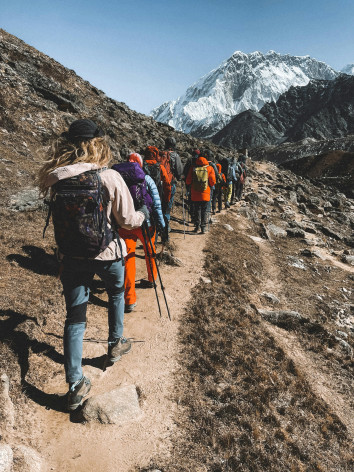
• Practice trekking poles
Stair climbing without long breaks builds strength for steep sections near Namche and Tengboche.
Your body should feel stronger, not exhausted. Recovery is essential.
Preparing for Altitude
You cannot fully simulate altitude at home. But strong cardiovascular fitness improves oxygen efficiency.
During the trek:
• Walk slowly
• Follow acclimatization days
• Drink 3 to 4 liters of water daily
• Avoid alcohol
• Sleep well
Good fitness lowers the risk of altitude sickness and improves overall performance.
Nutrition During Training
Fuel properly to support progress.
Daily focus:
• Lean protein
• Whole grains
• Fresh vegetables
• Healthy fats
• Proper hydration
Before long hikes:
• Complex carbohydrates for sustained energy
After training:
• Protein within 30 minutes
Avoid crash dieting before the trek. Stable energy supports endurance.
Mental Preparation
The Everest region tests patience.
Cold mornings. Simple teahouses. Long walking hours. Limited comforts.
Train your mindset:
• Exercise in different weather conditions
• Practice controlled breathing
• Focus on one step at a time
• Stay calm under fatigue
Mental strength ensures steady progress on difficult days.
Fitness Benchmarks Before Departure
Aim to achieve:
• 10 km walk under 2 hours
• 1,000 continuous stair steps
• 5 hour hike without severe fatigue
• Comfortable backpack carrying
If you reach these targets, you are ready.
Two Weeks Before Departure
Reduce heavy training. Focus on:
• Light cardio
• Stretching
• Sleep quality
• Gear checks
• Hydration
Arrive in Kathmandu rested and confident.
Final Thoughts
The Everest Base Camp Trek is challenging but achievable. Thousands reach base camp every year through preparation and discipline.Train consistently. Strengthen your legs. Improve your endurance. Respect altitude. Walk steadily. Stand at Everest Base Camp with strength, confidence, and pride.
Recent From Blog
.jpg)